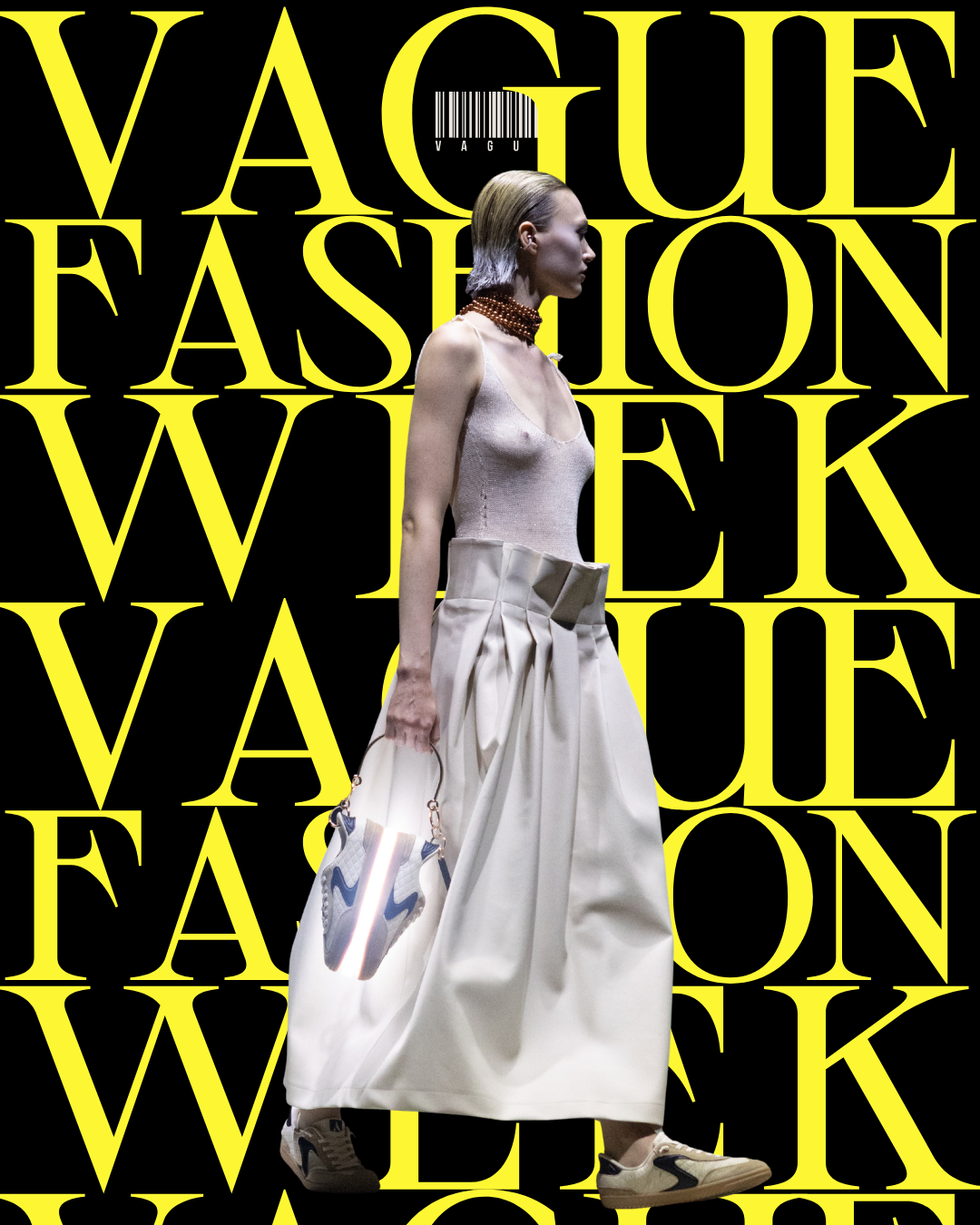
After the Rain with Rebekka Ruétz SS27
Petrichor is actually a very precise word for such an imprecise experience. Coined in 1964 by two Australian mineralogists, Isabel Joy Bear and Richard Thomas, it names the smell of rain falling on dry earth; specifically, in biological terms, the moment geosmin, a compound released by soil bacteria, rises into the air as water hits the ground. It’s a sensory event that only occurs in the void between two bipolar states. You cannot smell it in the drought. It’s scarcely detected in the downpour. Only during the period of transition does it make itself briefly yet unmistakably present.
This season, Rebekka Ruétz named her SS27 collection after it, and in the grand scheme of things (“things” being the mechanics of the fashion industry’s calendar), I’m not sure a more appropriate name exists for a spring collection shown ahead of the September fever pitch. But this collection is anything but fleeting. The silhouettes, the palette, the textural contrasts, the progression of the show held at Motorwerk — the looming industrial hall in the city's north — are all organized around the phenomenology of imminence, this feeling that something irrevocable will soon occur. It’s a welcome reprieve from the florals the industry offers in surplus every year. Ruétz doesn’t reference nature explicitly. Instead, she models it as a metaphysical experience of a very physical event, that feeling of anticipation, of imminent change; offering garments as a conduit to envelope a body inside that feeling.
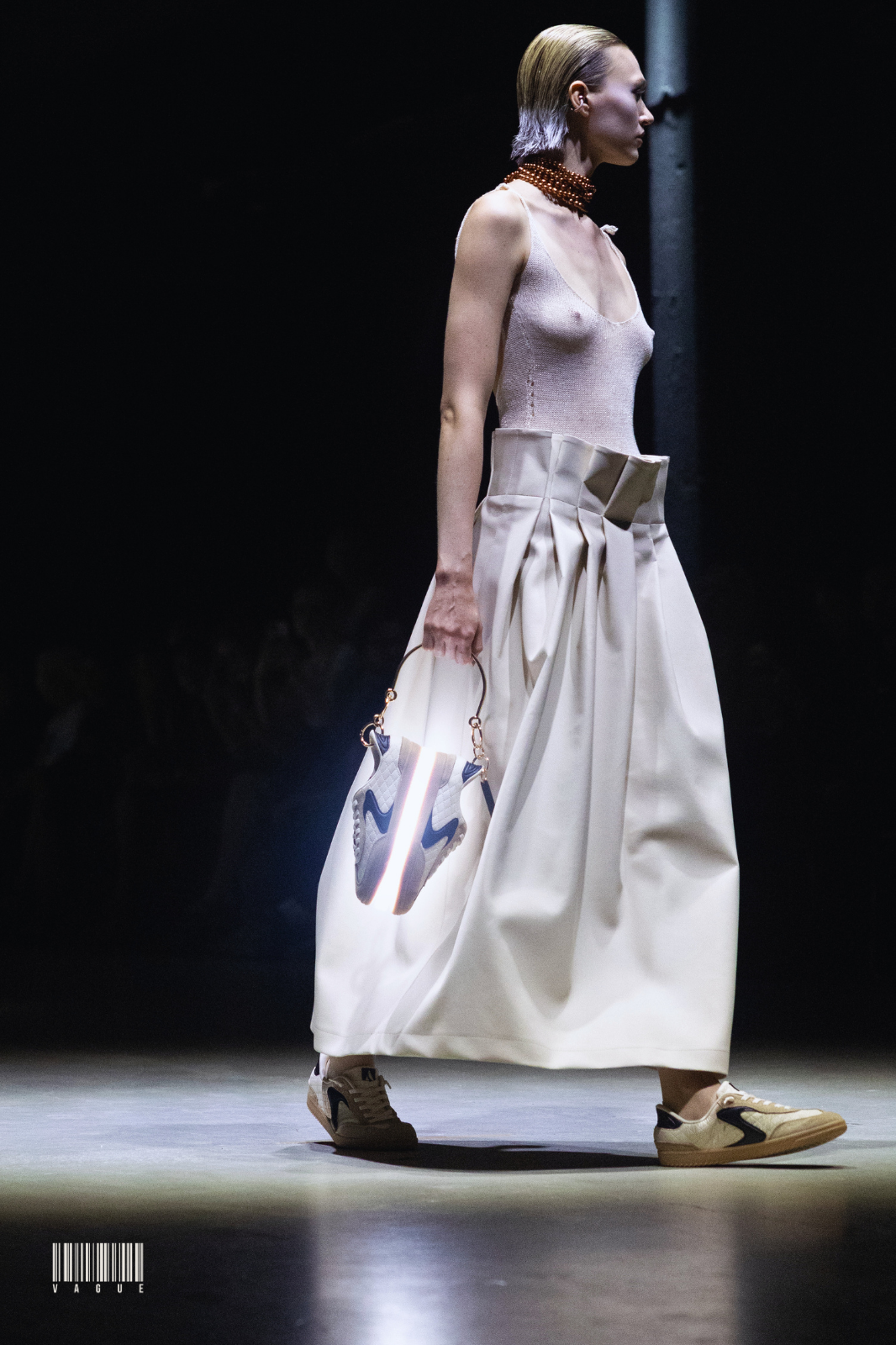
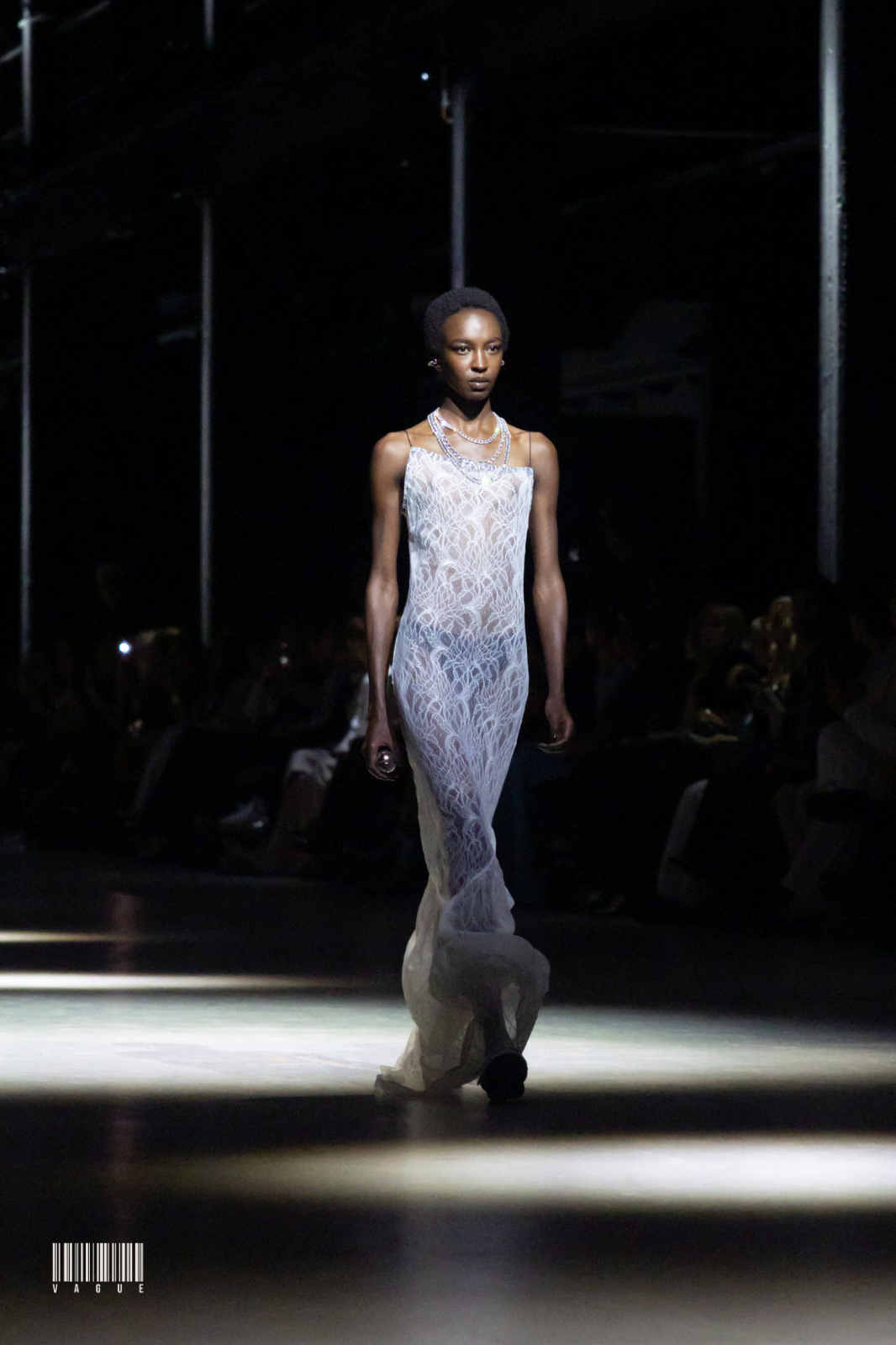
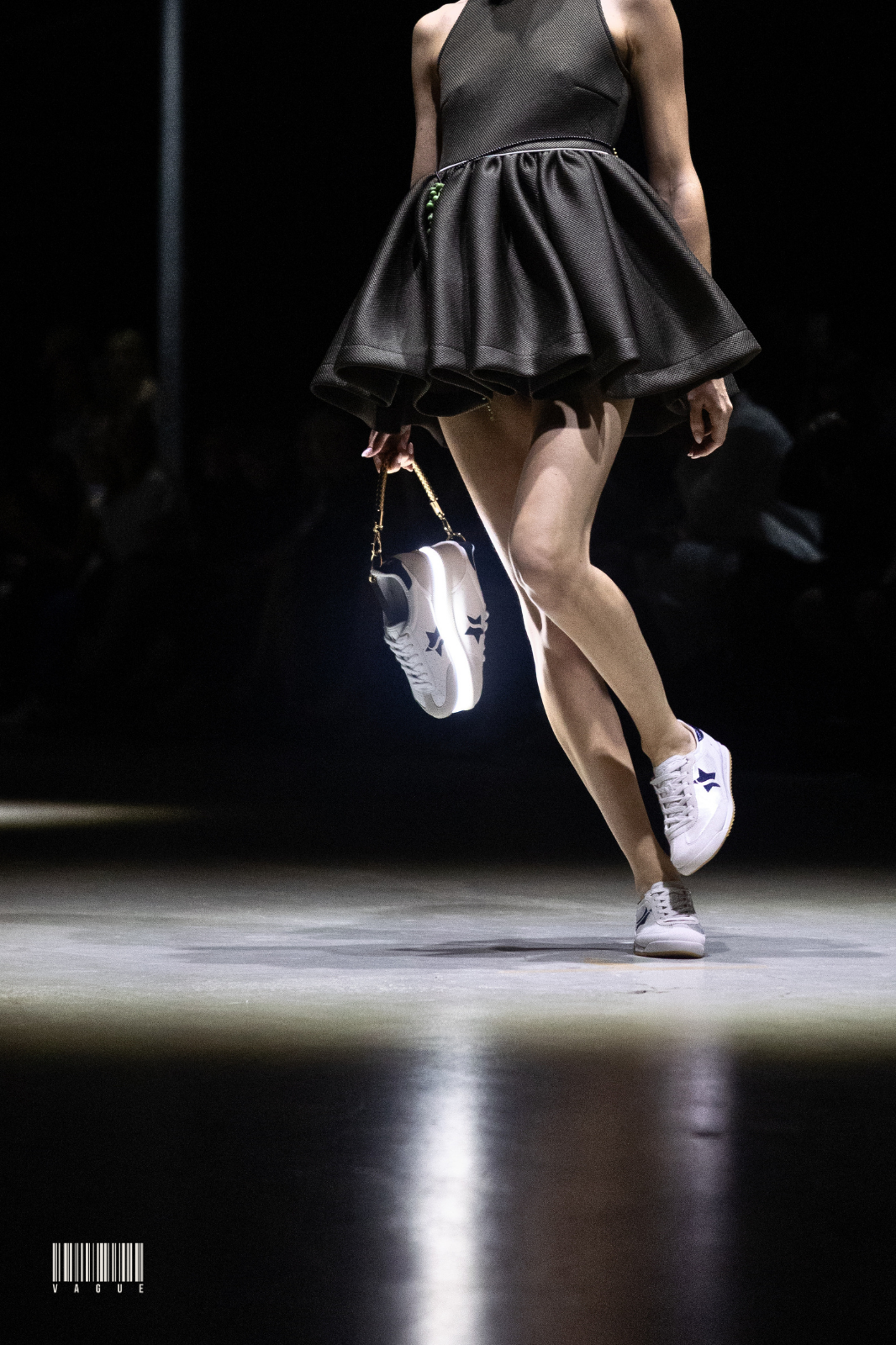
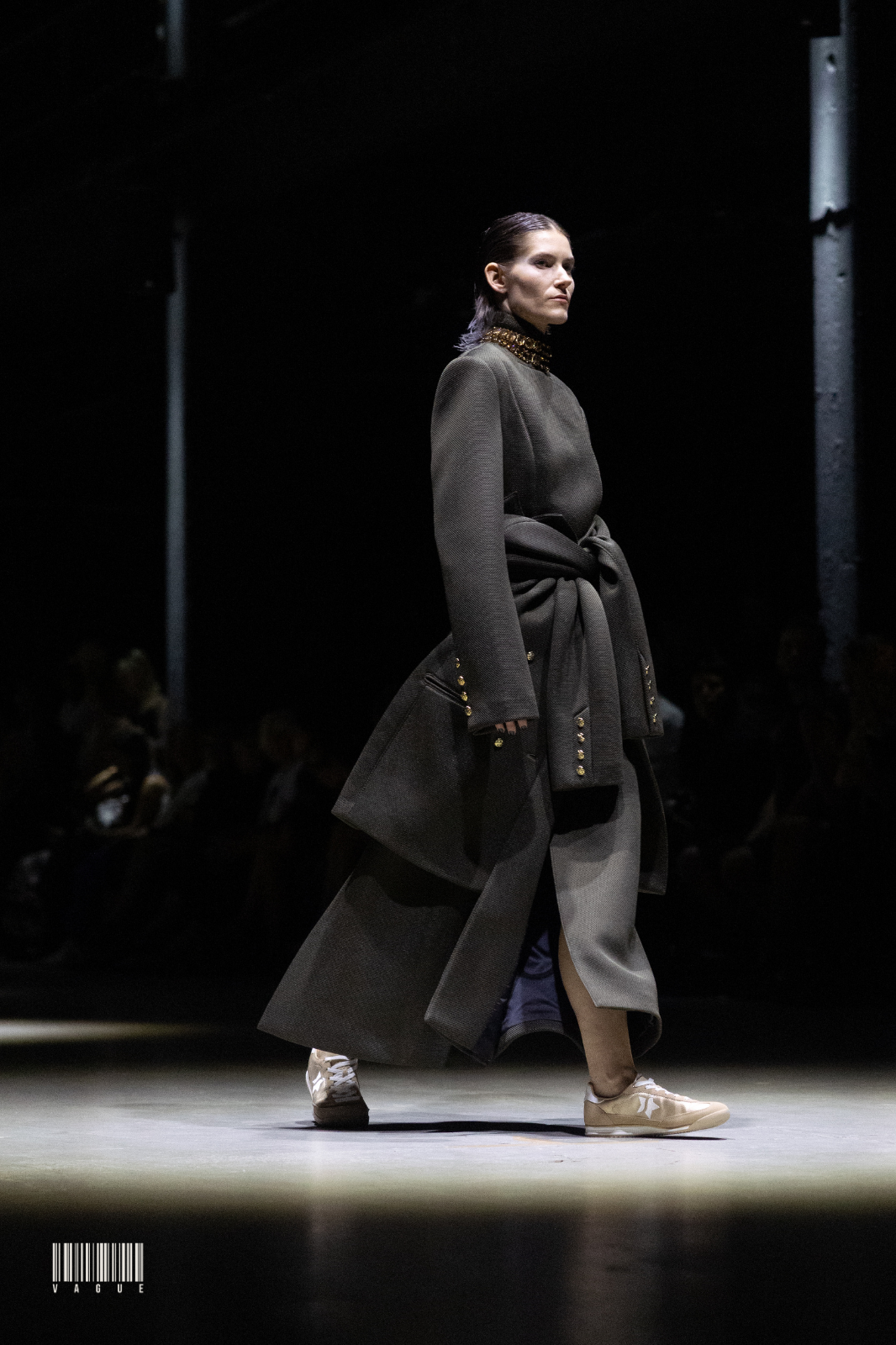
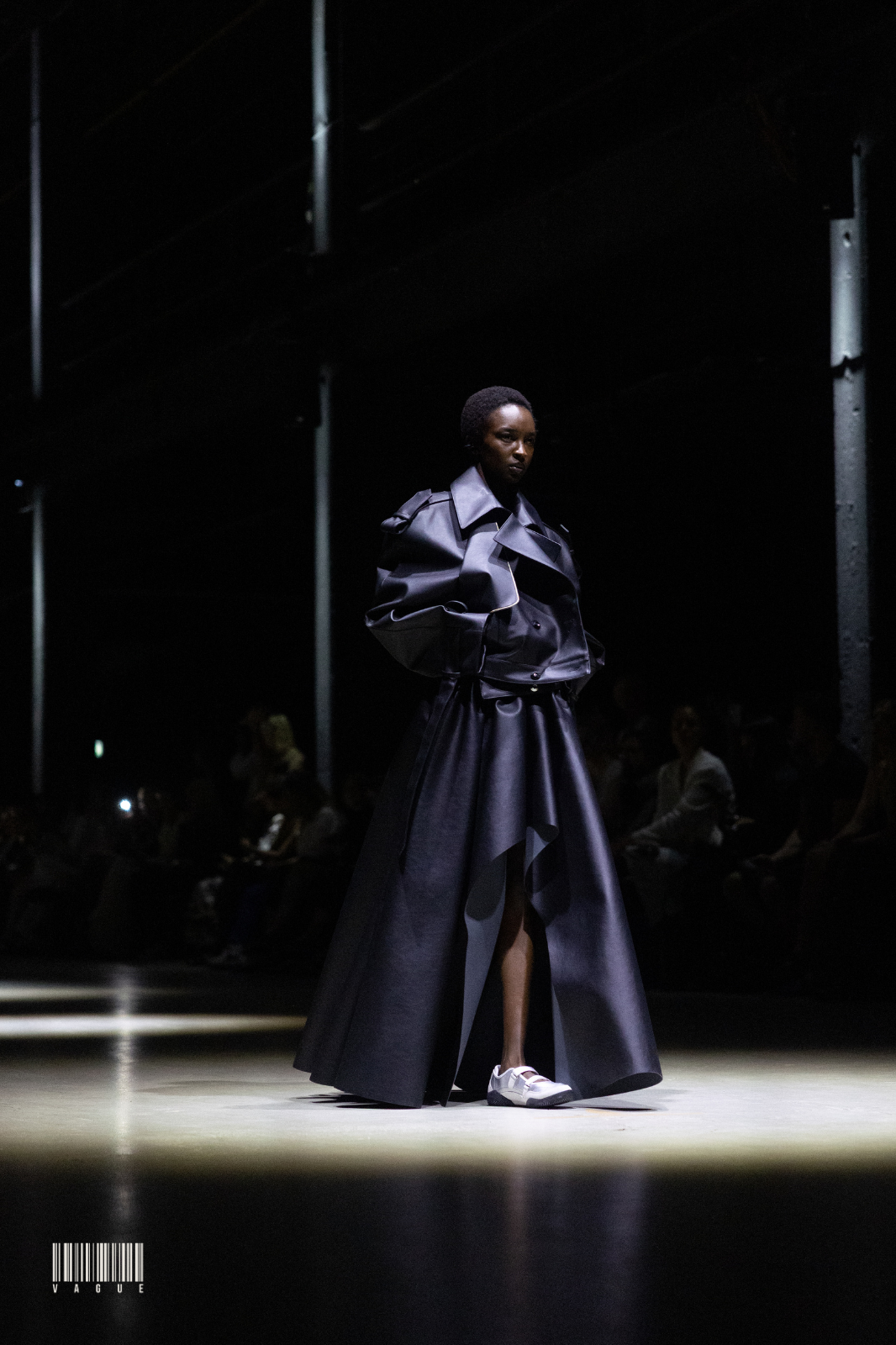
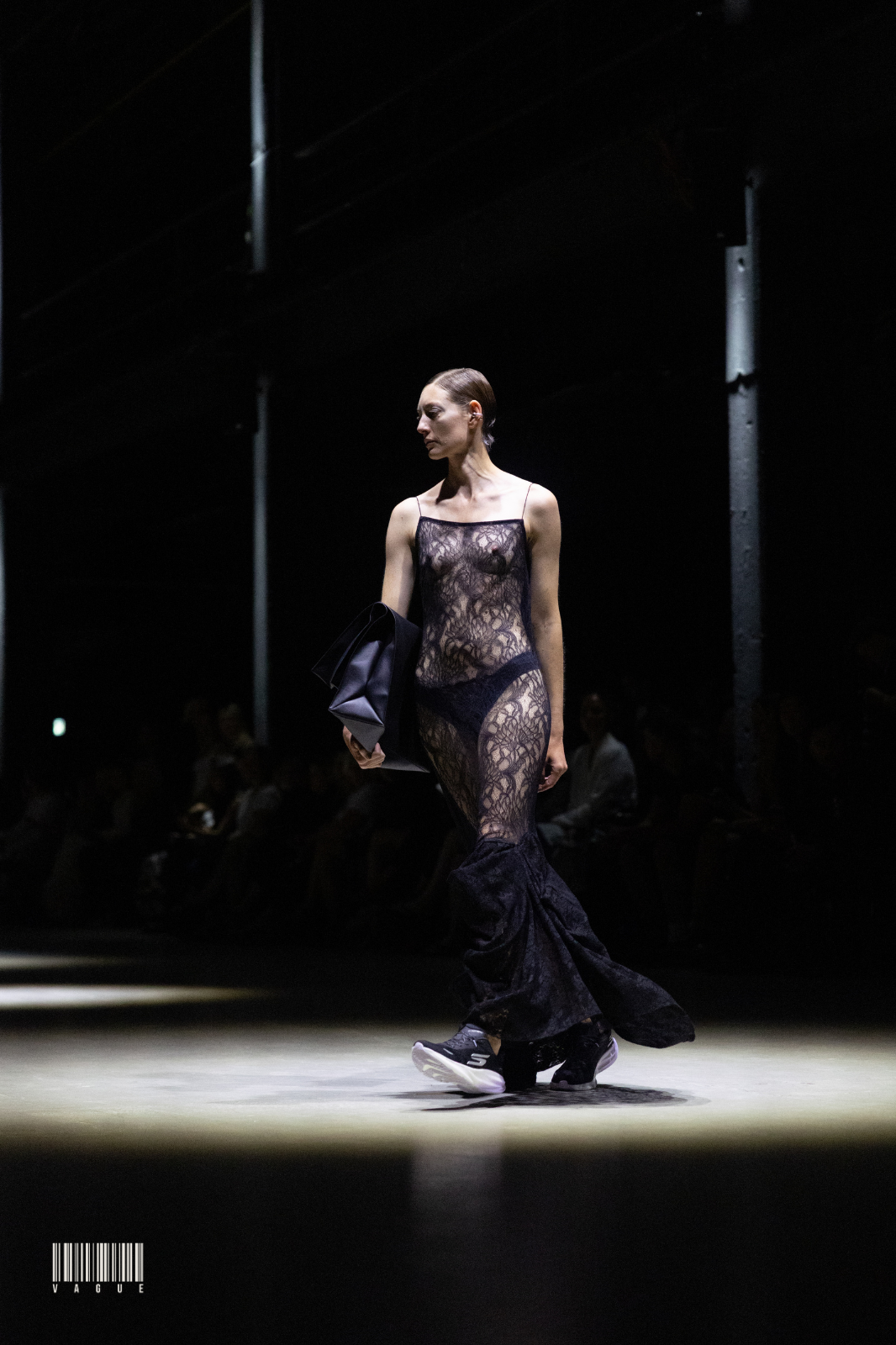
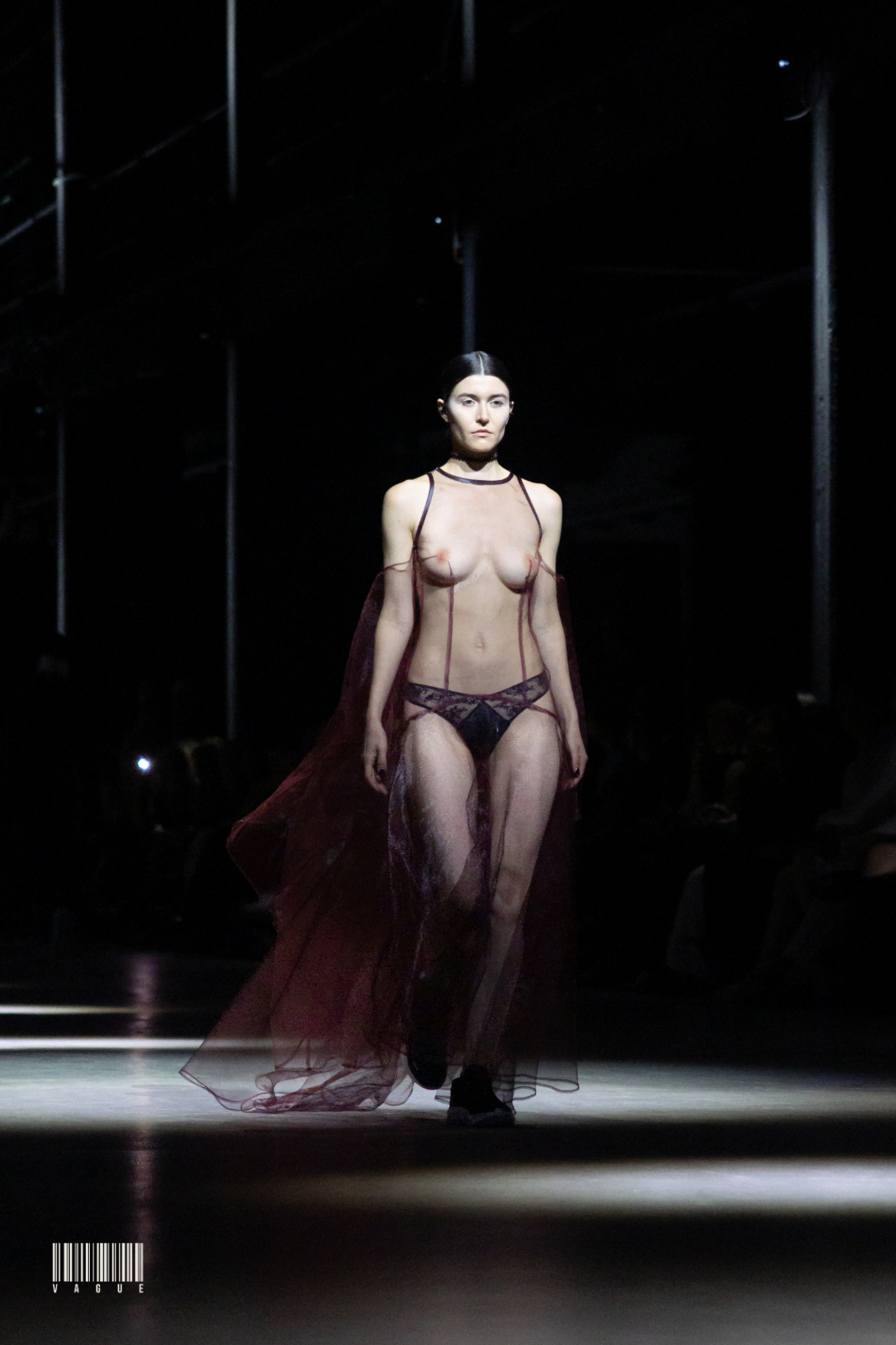
The collection’s colour proposition oscillates between white and black as consistent endpoints, mirroring the contrast between bare soil and heavy cloud. Stiff materials like taffeta and leather that can morph and hold their position press against more delicate, transparent knits in the form of tops and dresses that reveal the body just as that certain light does before rain, turning everything briefly translucent. Between the collection's more sculptural silhouettes, deconstructed elements provide their own accents. Laddered stitching provide further openings on the surface as knotted shirts worn as skirts wrap the body in transmutation. Collar-like constructions on waistbands shift the architecture of the silhouette downward, bringing attention to the transition between bodice and hip, top and bottom. Military ephemera also surface in khaki coats with gold buttons that nod toward uniform before the chain-like accessories pull the collection back into something more ceremonial, more celebratory. This is a storm with multiple moods.
This reverence for nature echoes Ruétz's ongoing commitment to sustainability. Not just in the form of buzzy tick box exercises like certification, carbon accounting and supply chain disclosure but as a consistent intention throughout the brand’s DNA: two collections a year, produced in Germany, designed with that conviction as a commercial responsibility, not a marketing strategy. Fifteen seasons into this slow fashion practice, the brand has nothing to prove of its ethics. Even its choice of venue suggests a keen awareness of the realities of sustainable fashion. Industrial manufacture and slow production have a complex relationship and Motorwerk Berlin holds both histories in its walls. Throughout the 20th century, the building operated as an electrical machinery plant before the fall of the Berlin wall granted its high brick walls and steel beams cultural venue status. Today, Motorwerk frequently plays host to runway showcases during Berlin Fashion Week, a fashion institution similarly steadfast in its commitment to fostering slow, sustainable fashion.
Petrichor is where these histories intersect, which as a responsibility requires a kind of readiness, a willingness to stand in that space between what was and what is coming and feel it fully; no retreating into the drought that precedes or the saturation that follows. This collection both encompasses and dresses that posture. The rain, when it comes, will feel like this.
credits
words — karina so.
photography — sihoo leon kim
design — karina so.